
Password hygiene refers to the disciplined practice of creating, managing, and protecting passwords throughout their lifecycle. It’s a cornerstone of modern cybersecurity. Strong passwords reduce the risk of unauthorized access and data breaches. More than 80 percent of cyberattacks use stolen personal data, and weak or reused credentials are among the most commonly exploited vulnerabilities in both corporate and personal systems.
The best practices for ensuring good password hygiene and protecting your organization from attacks are well known. For example:
- Define your password policy: Everyone in your organization must use strong, unique passwords that they never reuse or share.
- Use a password manager tool: Encourage everyone to generate and store strong, unique passwords using a secure system.
- Update passwords regularly every 60-90 days, with immediate changes when compromise is suspected or detected.
- Enable multi-factor authentication (MFA): Enabling MFA on your systems and accounts adds an extra layer of security that helps prevent unauthorized access. However, it’s not impregnable. For greater protection, use measures such as hardware security keys or biometric authentication.
- Provide security awareness training: Ensure everyone, across teams and at all levels, understands the risks of password reuse and how to follow best practices.
However, despite widespread awareness campaigns, poor password habits persist. A 2019 Google study found that 52 percent of people use the same password across multiple accounts. This means that if one of their passwords falls into the wrong hands, they could be exposed to hacking or fraud across multiple accounts or systems. A range of studies show the extent of the problem:
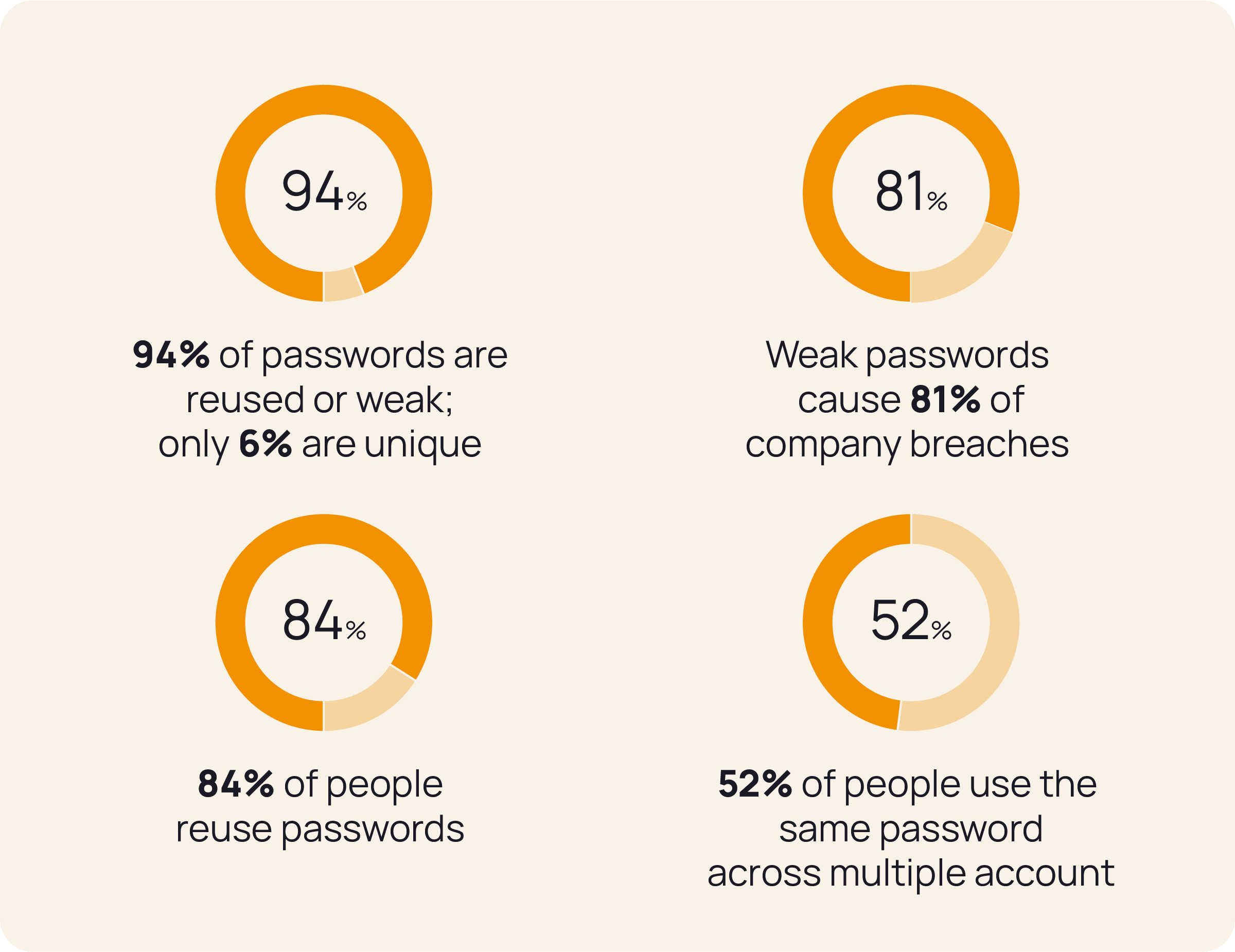
Sources: cybernews.com, DemandSage, Google, and LastPass.
The world’s top passwords, according to Cybercheck data
At Cybercheck, our credential monitoring shows us the extent of password reuse globally.
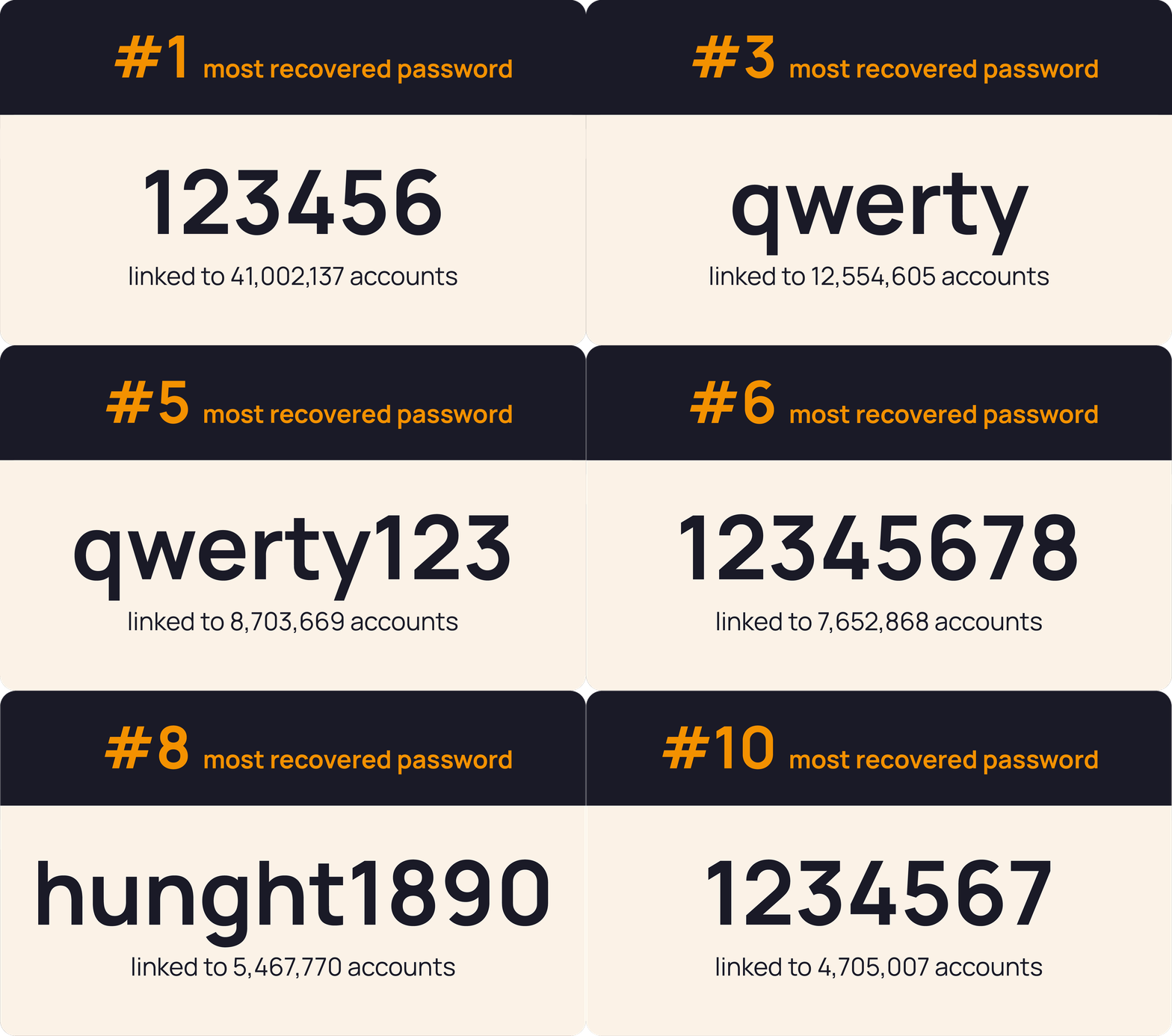
Our analysts have recovered the password abc123 almost 2.5 million times and found almost 21 million instances of the password 12345678. Even more incredibly, the most reused password is the even simpler 123456, which we’ve recovered more than 41 million times.
It’s little wonder that cybercrime is running out of control when so many people are making it so easy.
Why do people reuse passwords despite knowing the risks?
The answer lies in behavioral psychology. Understanding the psychological drivers behind password reuse is vital for developing an effective security strategy.
Convenience often trumps caution. Passwords are one of the nuisances of modern living. As more of our daily activities move online, we have an increasing number of passwords to remember (or forget), and it’s easy to feel overwhelmed. Reusing passwords is a coping mechanism. It saves time and reduces cognitive load.
Many people are also complacent about the dangers. They believe attackers are only interested in large organizations or wealthy, influential individuals. This underestimates the scale of automated credential attacks, which can target anyone and everyone.
There is also a misplaced sense of control. Users believe that adding a minor variation, such as a number or symbol, makes a reused password secure. In reality, such patterns are predictable. They’re easily cracked by credential stuffing and password spraying algorithms.
Cognitive biases that shape poor habits
Several psychological biases reinforce risky behaviors and discourage the adoption of security measures.
Optimism bias leads people to believe that breaches occur to others, not themselves, and to underestimate the risks they face.
Availability bias, sometimes known as the availability heuristic, also plays a role. People tend to be influenced most strongly by the events or instances that come to mind most readily. When they think about cyberattacks, people often recall stories of sophisticated hacks involving advanced malware. This skews their perception, making password hygiene seem less critical than it is. Even the largest, most damaging attacks often begin with password theft from someone who falls for a fake message.
Present bias further complicates matters, as immediate convenience outweighs future risk. Creating a complex password or enabling multi-factor authentication feels like extra work today, whereas the potential consequences of not doing so remain abstract and distant.
Gamification and nudges: Improving credential security
Changing people’s habits and behavior requires more than technical solutions. It demands psychological insight.
Gamification offers one path forward. Turning password management into a system of challenges and rewards can increase engagement. For example, by creating dashboards that score password strength and celebrate improvements.
Behavioral nudges can also help. In behavioral science, nudge theory is about steering people imperceptibly towards making the right choices. Applied to passwords, this could mean showing simple prompts on a login screen, such as reminders of recent breaches. Framing messages around collective responsibility, rather than individual blame, encourages compliance without resistance.
The value of credential monitoring
Cyber threat intelligence solutions such as Cybercheck provide an early warning system. Our analysts infiltrate and monitor the criminal platforms, forums, and channels where stolen data is exchanged.
If cybercriminals are trading information about you or your organisation, our credential monitoring solution detects it and alerts you. That means you can change your passwords, block your cards, and shut out potential attackers, before they make you their next victim.
You can also monitor your organization for duplicate passwords and suspicious activity. Cybercheck’s dashboard shows your data security at a glance, including your overall safety level and specific areas where you need to act. This helps you to guide people towards better password hygiene and safer habits, so you can reinforce your organizational security from within.